 blog
Reliable Utility Trailer Rental Service: What to Know
Table of Contents
- What Makes a Reliable Utility Trailer Rental Service
- Trailer Types Available for Rent: Utility, Flatbed, and Car Haulers
- Understanding Utility Trailer Rental Cost and Pricing
- Trailer Rental Requirements: What You Need to Know
- Utility Trailer Rental Checklist: Pre-Pickup Inspection
- Why Transparent Pricing and No Hidden Fees Matter
- Rental Duration, Availability, and Delivery Options
- Conclusion
- Frequently Asked Questions
Last Updated: October 19, 2026
What Makes a Reliable Utility Trailer Rental Service
A reliable utility trailer rental service prioritizes transparency, equipment quality, and customer convenience above all else. When you rent a trailer, you're trusting that business with your project timeline and your safety on the road. That's why the best rental services offer well-maintained equipment, honest pricing with no hidden fees, and responsive customer support when you need it.
At Forney Trailer Rentals, we've built our reputation on straightforward service. You book online, pick up your trailer in about 30 minutes, and get back to your project. No counter lines. No surprise charges. No pressure to buy add-ons you don't need.
What separates a reliable service from the rest comes down to a few key things. First, the equipment itself. Trailers take a beating, and worn-out brakes, bald tires, or broken lights turn a simple move into a dangerous liability. Second, pricing clarity. When you see a rental quote, that's your actual cost, not a starting point for upsells. Third, availability and speed. If you need a trailer this Saturday morning, you should know right now whether it's available, not find out when you show up.
Trailer Types Available for Rent: Utility, Flatbed, and Car Haulers
Not all trailers are the same, and choosing the wrong type can mean a failed project or unnecessary rental costs. Understanding what each trailer does, and what it doesn't, saves time and money.
Utility Trailers for DIY Projects and Moves
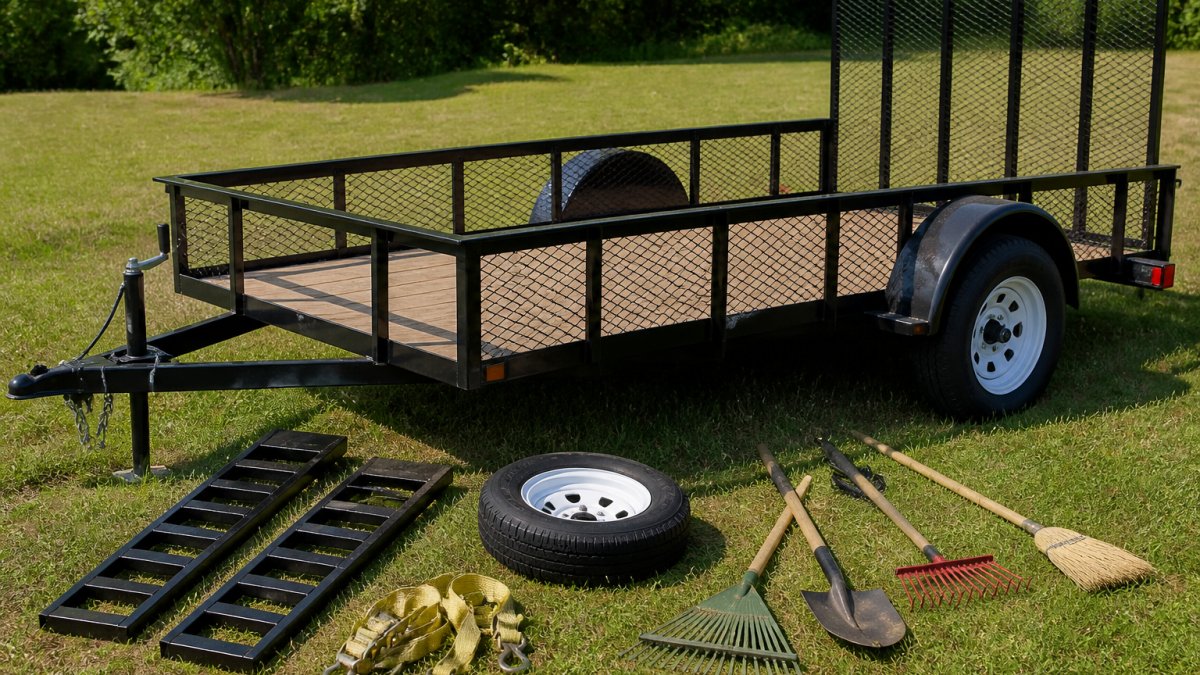
A utility trailer is the workhorse of the rental world. It's an open, rectangular cargo bed with side rails, typically 4 by 8 feet or 5 by 10 feet. Utility trailers work for hauling landscaping debris, furniture during a move, tools and equipment to a jobsite, or general household items you need to transport.
The open design means you can load from the top and sides, which matters when you're moving a couch or stacking mulch bags. The payload capacity usually ranges depending on the trailer size. Most utility trailers come with a standard ball hitch, which fits most passenger vehicles and light trucks.
Common uses include residential moves, yard cleanup, construction material transport, and equipment hauling. If your project involves moving things from point A to point B without needing weather protection, a utility trailer is usually the right choice.
Flatbed Trailers for Heavy Equipment
A flatbed trailer is a flat, open platform with no sides or roof. It's designed for hauling heavy, bulky items that won't fit in a standard utility trailer, think construction equipment, pallets of materials, or machinery. Flatbeds come in various sizes and weight capacities.
The flat surface means you can drive a small piece of equipment onto the trailer or use a forklift to load pallets. Tie-down points along the edges let you secure loads safely. Flatbeds are common on jobsites, for equipment rental companies, and for businesses that move large items regularly.
The trade-off is that flatbeds require more towing capacity from your vehicle. A standard passenger car won't handle a heavily loaded flatbed. You need a truck with adequate towing power and a proper hitch setup.
Car Haulers for Vehicle Transport
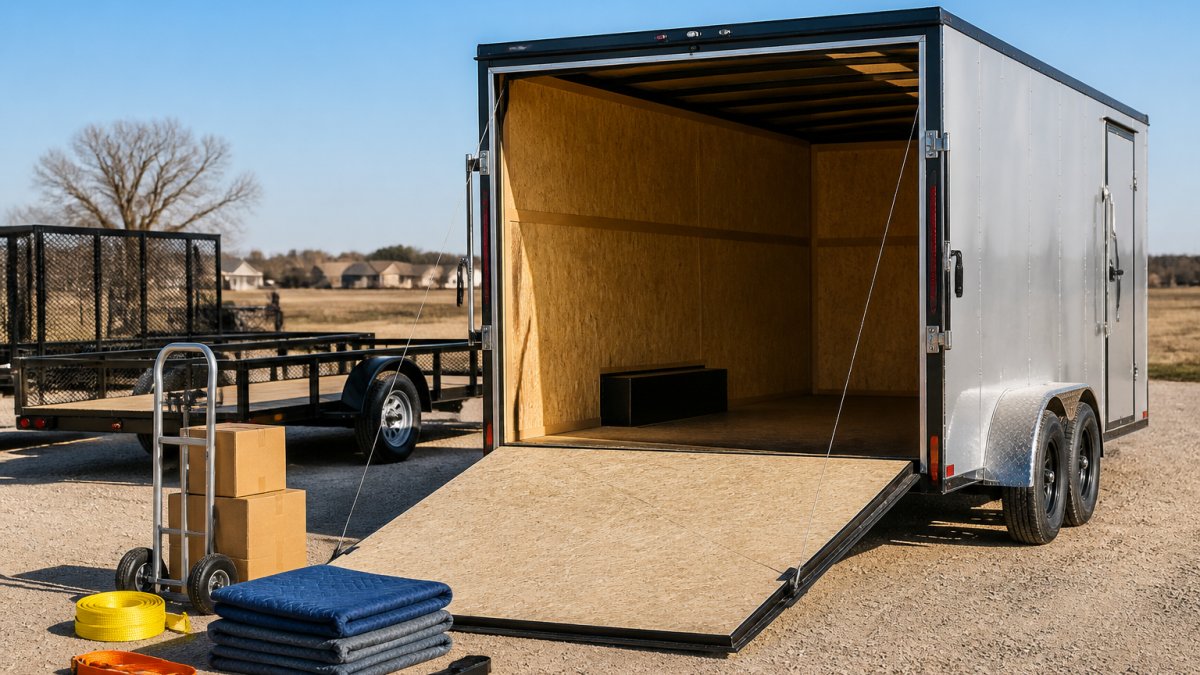
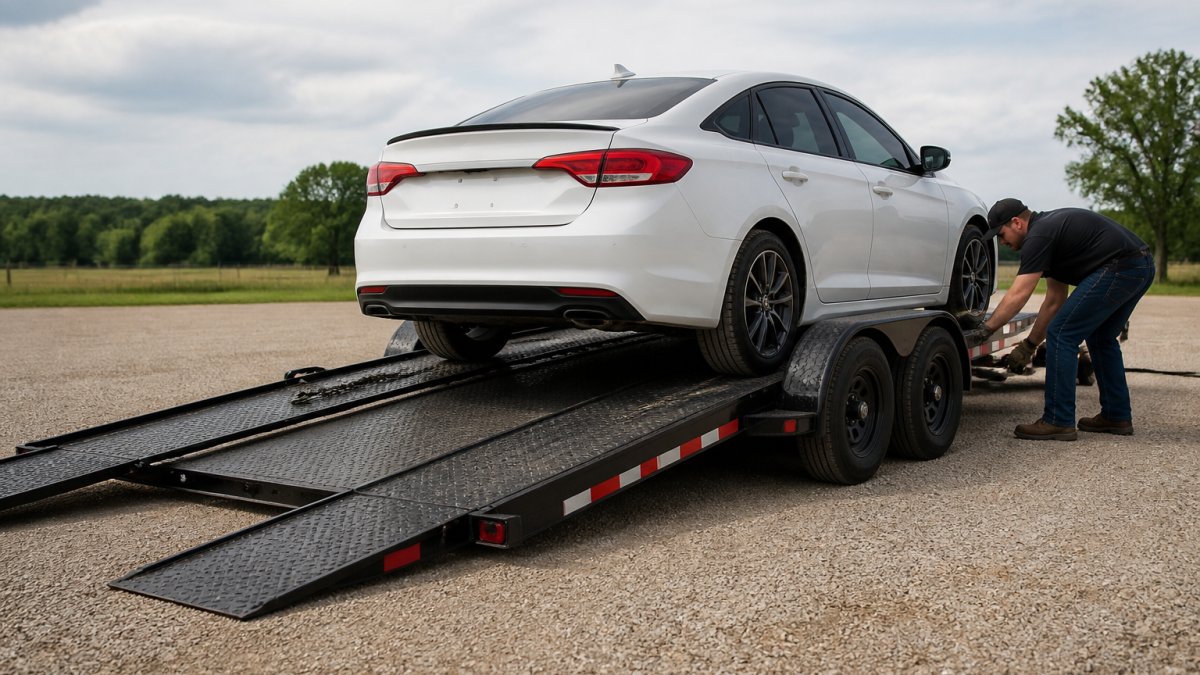
A car hauler is a specialized trailer designed specifically for transporting vehicles. It typically has two levels or a single long bed with wheel wells and tie-down points. Car haulers keep vehicles secure during transport and protect them from road debris and weather.
Car haulers are used by people relocating vehicles, transporting cars for repair, or moving multiple vehicles at once. They require an enclosed or open design depending on the level of protection needed. Most car haulers accommodate standard passenger cars, though some handle larger vehicles or motorcycles.
Car haulers demand a vehicle with significant towing capacity. Improper towing can damage both the hauler and the vehicle being transported, so matching your tow vehicle to the trailer's specifications is critical.
Understanding Utility Trailer Rental Cost and Pricing
Rental pricing depends on several factors: trailer type, rental duration, distance traveled, and any optional services like delivery. Many rental services use tiered pricing where daily rates decrease if you rent for multiple days or weeks.
Most utility trailer rentals are quoted as hourly, daily, or weekly rates. An hourly rate works for short local moves. Daily rates suit weekend projects. Weekly or monthly rates offer better value if you're holding the trailer longer. Some services offer automatic discounts for multi-day rentals, which rewards customers who plan ahead.
Transparent pricing means you see the base rental cost, any delivery fees if applicable, and any required insurance or damage waiver upfront. There should be no surprise charges when you return the trailer. If a rental service won't quote you a total price before booking, that's a red flag.
The real cost comparison isn't just the rental rate, it's the total experience. A cheaper hourly rate at a service with long wait times or poor equipment quality can end up costing more in frustration and delays than paying slightly more for reliable, fast service.
Trailer Rental Requirements: What You Need to Know
Renting a trailer involves more than just showing up with cash. You'll need to meet specific requirements to legally and safely operate the equipment.
Towing Vehicle and Hitch Compatibility
Your vehicle must have adequate towing capacity for the trailer you're renting. Every trailer has a maximum towing capacity listed on its specifications. Your vehicle's manual lists its towing capacity. The trailer weight, including cargo, cannot exceed your vehicle's towing limit.
The hitch connection is equally important. Most utility trailers use a standard ball hitch (1-7/8 inch, 2 inch, or 2-5/16 inch balls). Your vehicle must have a receiver hitch that matches the trailer's ball size.
Braking systems matter too. Trailers over a certain weight threshold require electric or hydraulic brakes. Your tow vehicle needs a brake controller installed to operate trailer brakes safely. If your vehicle isn't equipped for this, you can't safely tow a heavy trailer, regardless of engine power.
Driver License and Insurance
You need a valid driver's license to rent a trailer. Some rental services require proof of insurance that covers trailer rental. Your personal auto insurance may or may not extend to trailer rental, call your insurance agent before you rent to confirm coverage.
Many rental services offer damage waivers that protect you if the trailer gets damaged during your rental period. This is optional but recommended, especially if you're unfamiliar with towing.
Utility Trailer Rental Checklist: Pre-Pickup Inspection
Never accept a trailer without inspecting it first. A pre-pickup inspection takes 10 minutes and protects you from liability for existing damage and ensures the trailer is actually safe to tow.
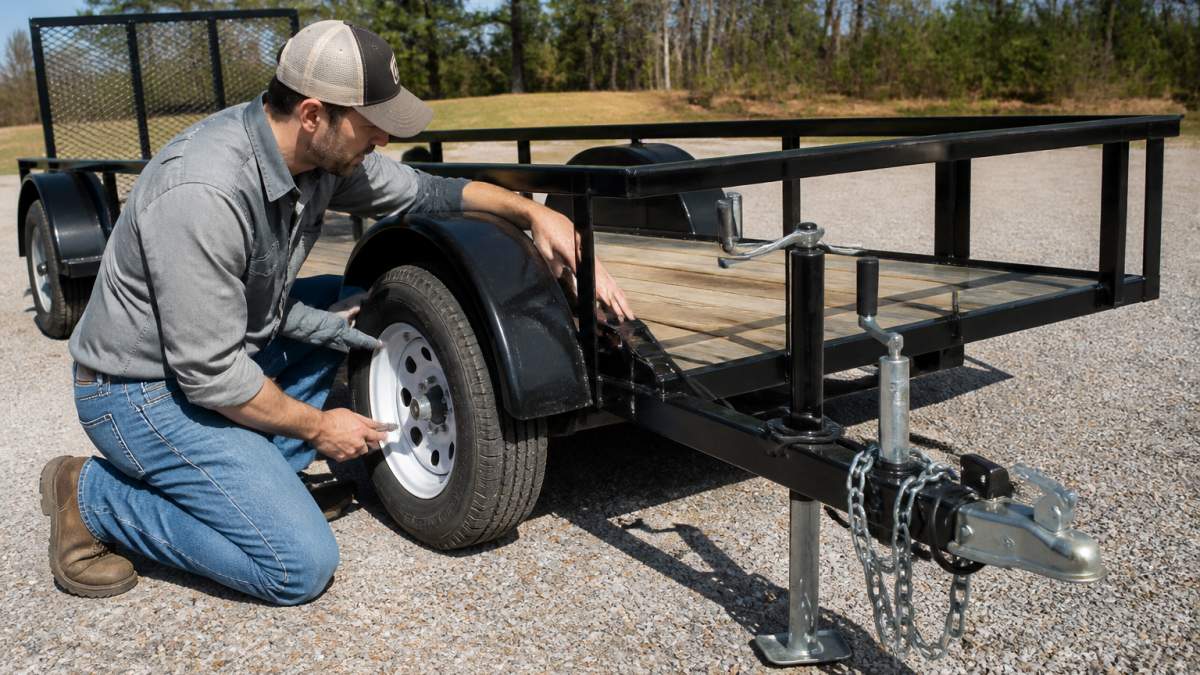
Check the tires for adequate tread depth. Run your finger across the tire, you should feel significant tread, not a smooth surface. Look for cracks, bulges, or uneven wear.
Test the trailer lights. Turn on the tow vehicle's headlights and ask the rental staff to confirm that the trailer's running lights, brake lights, and turn signals work. Non-functioning lights are illegal and dangerous.
Inspect the hitch and coupler for damage, rust, or wear. The ball should be smooth and undamaged. The coupler should lock securely onto the ball with no wobbling or gaps.
Check the frame for visible rust, cracks, or bending. Minor surface rust is normal, but structural damage compromises safety. Look at the underside if possible, rust underneath suggests water damage or poor maintenance.
Examine the tie-down points and side rails for damage. If you're planning to secure cargo, these attachment points need to be intact and functional.
Document any existing damage with photos or video. If the service won't acknowledge damage you've documented, that's a reason to rent elsewhere.
Why Transparent Pricing and No Hidden Fees Matter
Hidden fees erode trust and turn a simple rental into a frustrating experience. A rental service that charges surprise fees, whether labeled as "administrative costs," "fuel surcharges," or "late return penalties", is prioritizing revenue extraction over customer relationships.
Transparent pricing means the quote you see is the price you pay. No additional charges appear when you return the trailer. No pressure to buy insurance you didn't ask for.
When a rental service advertises "no hidden fees," that commitment should extend to every interaction. Delivery fees are disclosed upfront. Damage waivers are optional, not mandatory. Cancellation policies are clear in writing before you book. Multi-day discounts apply automatically.
The benefit of transparent pricing goes both ways. As a customer, you know exactly what you're paying and can compare services fairly. As a business, transparent pricing builds reputation and repeat customers. People remember being treated fairly, and they recommend that service to others.
Rental Duration, Availability, and Delivery Options
Knowing whether a trailer is actually available when you need it matters more than a good price. A cheap rate doesn't help if the trailer is booked when you show up.
Most rental services offer online booking that shows real-time availability. You can see which trailers are available on your desired dates and reserve one immediately. This removes uncertainty and guarantees you'll have equipment when you need it.
Rental duration flexibility is also valuable. Some services charge by the hour, which works for short local moves. Daily rates suit weekend projects. Weekly or monthly rates offer better value for longer jobs.
Delivery options expand accessibility, especially if you're not close to the rental location. A service that delivers within a certain radius removes the burden of traveling to pick up the trailer. Delivery costs vary, but knowing them upfront lets you factor them into your project budget.
Return flexibility matters too.
Conclusion
A reliable utility trailer rental service removes friction from your project. You get well-maintained equipment, transparent pricing, and responsive support when you need it. Forney Trailer Rentals delivers exactly that, fast online booking, trailers ready in about 30 minutes, honest pricing with no hidden fees, and delivery available within 5 miles. Most rentals come with automatic savings on multi-day bookings, and you can cancel or modify your reservation free up to 24 hours before pickup. When your next project needs a trailer, choose a service that prioritizes your convenience and peace of mind. Book My Trailer with Forney Trailer Rentals and get started today.
Frequently Asked Questions
What should I check before renting a utility trailer?
Inspect the trailer frame for damage, check tire condition and pressure, test all lights and brake functions, verify the hitch matches your vehicle, ensure safety chains are present and secure, and document the trailer's condition with photos. A thorough pre-rental inspection protects you from liability for pre-existing damage and confirms the equipment is roadworthy before you leave the rental location.
What are the main trailer rental requirements?
You'll need a valid driver's license, proof of insurance, and a vehicle with a compatible hitch rated for the trailer's payload capacity. Verify your vehicle's towing capacity matches the trailer's weight limit. Always confirm specific requirements with your rental provider before booking.
How do I know what size utility trailer to rent?
Measure your load's length, width, and height, then check the trailer's interior dimensions. Consider payload capacity. For vehicles, an enclosed trailer or car hauler is safer than an open utility trailer. Contact your rental service to discuss your specific hauling needs; they can recommend the right size and type based on your load and towing vehicle.
What hidden fees should I watch for when renting a trailer?
Watch for damage waivers not disclosed upfront and insurance add-ons. Transparent rental services list all fees clearly before checkout. Confirm whether delivery and multi-day discounts are included or extra. Ask about cancellation policies and whether you can modify your reservation without penalty. Request an itemized quote in writing so you understand the total cost before committing.